
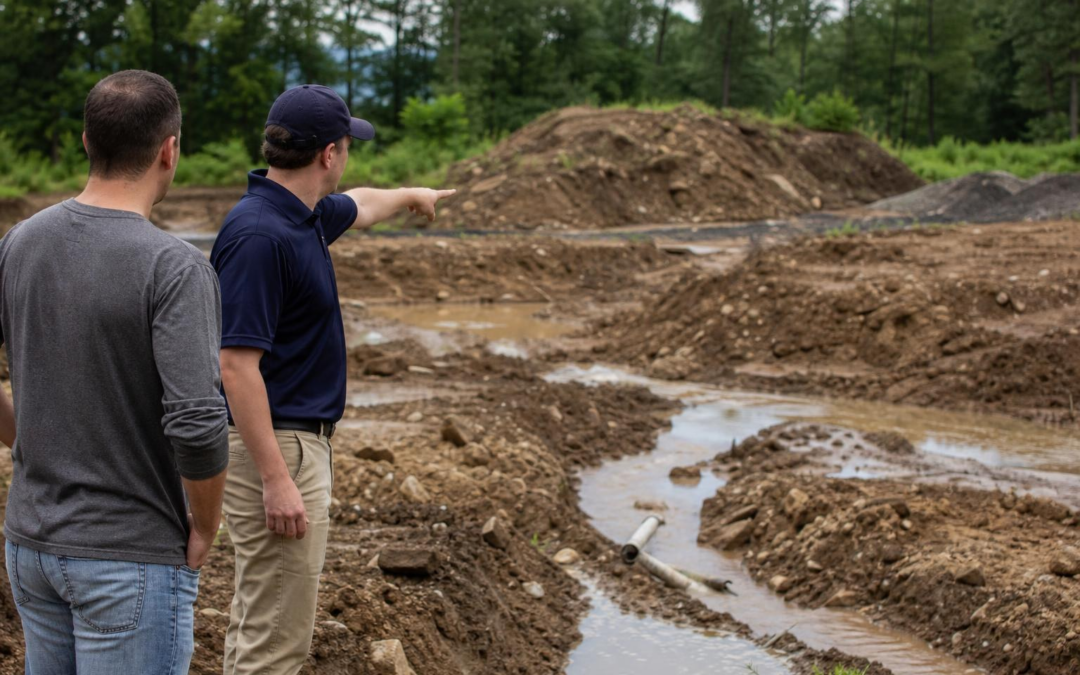
Buying land for a custom home in New Jersey can feel like a dream until site conditions turn that dream into a money pit. Between the state’s glacial geology, dense regulatory framework, and wildly varied terrain from the Highlands to the Pine Barrens, there are dozens of ways a build site can surprise you after you’ve already signed on the dotted line. The smartest thing any prospective homeowner can do is understand the site conditions that commonly derail custom home projects across New Jersey before committing to a parcel. A gorgeous wooded lot or a hillside with sweeping views might look perfect on a Sunday afternoon drive, but what’s happening beneath the surface and inside municipal zoning codes tells the real story. This piece breaks down the major categories of risk: soil and geotechnical problems, environmental restrictions, topography, utility access, and zoning hurdles. If you’re planning to build, treat this as your pre-purchase checklist.
Evaluating New Jersey’s Complex Soil and Geotechnical Risks
New Jersey’s geology is anything but uniform. The northern part of the state sits on ancient bedrock with glacial deposits, while the southern half is dominated by sandy coastal plain soils. Between those extremes, you’ll find pockets of expansive clay, fill material from old industrial operations, and seasonal water tables that can rise to within inches of the surface. A geotechnical investigation before purchase isn’t optional: it’s the single most important due diligence step you can take. Skipping it to save $3,000-$5,000 has cost homeowners six figures in foundation redesigns and remediation work.
Managing High Water Tables and Poor Drainage
Parts of central and southern New Jersey, particularly in Monmouth, Ocean, and Burlington counties, deal with water tables that sit alarmingly close to the surface. A high water table doesn’t just mean a wet basement: it can make certain foundation types impossible, require expensive dewatering systems during construction, and limit or eliminate your septic options. Seasonal fluctuations matter too. A perc test done in August might look fine, but that same spot in April could be saturated. Any competent geotechnical engineer will test during the wet season or at least account for seasonal variation in their report.
Impact of Expansive Clay and Rocky Terrain
In the Piedmont region running through Somerset, Hunterdon, and parts of Mercer County, expansive clay soils are a recurring headache. These soils swell when wet and shrink when dry, creating cyclical pressure on foundations that can cause cracking, heaving, and structural movement over time. Foundation design in these areas often requires deeper footings, pier systems, or engineered fill, all of which add cost. Head north into Passaic or Sussex County, and you’re dealing with the opposite problem: shallow bedrock. Rock excavation for foundations, utility trenches, and septic systems can run $50-$150 per cubic yard depending on the rock type, and blasting (where permitted) adds its own layer of permitting complexity and neighbor relations challenges.
The Hidden Cost of Soil Contamination and Remediation
New Jersey has more Superfund sites than any other state, and contamination isn’t limited to those headline-grabbing locations. Former agricultural land may carry pesticide residues. Old gas stations, dry cleaners, and even residential properties with buried oil tanks can leave behind contaminated soil. A Phase I Environmental Site Assessment reviews historical land use and flags potential contamination. If anything turns up, a Phase II assessment involves actual soil and groundwater sampling. Remediation costs range from modest (removing a single underground storage tank for $10,000-$20,000) to catastrophic (full soil excavation and treatment exceeding $200,000). The NJDEP’s Site Remediation Program has strict requirements, and contaminated properties can sit in regulatory limbo for years.
Navigating Environmental and Wetland Restrictions
New Jersey’s environmental protections are among the strictest in the country. The Freshwater Wetlands Protection Act and Flood Hazard Area Control Act together create a regulatory framework that can render significant portions of a buildable-looking lot completely off limits.
NJDEP Buffer Zones and Conservation Easements
Wetlands in New Jersey come with buffer zones, and those buffers can extend up to 150 feet from the wetland boundary depending on the resource classification. A five-acre lot with a small seasonal wetland in one corner might lose two or more acres of usable area once buffers are applied. The NJDEP requires a Letter of Interpretation (LOI) to formally delineate wetland boundaries, and getting one can take six months or longer. Conservation easements present a different but related problem. Some parcels carry deed restrictions from previous Green Acres funding or farmland preservation programs that permanently limit development. These restrictions survive property transfers, and they’re not always obvious from a title search alone. Always request a full title review and check with the local planning office before assuming a lot is buildable.
Flood Zone Classifications and FEMA Compliance
FEMA flood maps were updated across many New Jersey municipalities following Superstorm Sandy and subsequent storms. Properties in AE or VE flood zones face strict building requirements: elevated structures, flood-vented foundations, and insurance costs that can exceed $5,000 annually. Even properties in the 500-year floodplain (Zone X shaded) face increasing scrutiny from lenders and insurers. The NJDEP’s flood hazard rules often exceed FEMA minimums, requiring additional riparian buffers along streams and rivers. A property that sits outside the FEMA flood zone but within a NJDEP flood hazard area can still face significant development restrictions. Check both federal and state maps before committing.
Topographical Challenges and Grading Logistics
Flat land is easy to build on. New Jersey has plenty of it in the southern half of the state. But the rolling hills and steep terrain of the northern counties create grading challenges that can add tens of thousands of dollars to a project.
Steep Slopes and Retaining Wall Requirements
Many municipalities in Bergen, Morris, and Passaic counties have steep slope ordinances that restrict disturbance on grades exceeding 15-20%. Some towns prohibit any construction on slopes over 25%. Even where building is permitted, steep sites require engineered retaining walls, specialized foundation systems, and careful sequencing of earthwork. A retaining wall that runs 100 linear feet at six feet tall can easily cost $40,000-$80,000 depending on materials and engineering requirements. Multiple terraced walls compound that expense. The visual appeal of a hillside lot often masks the engineering reality underneath.
Erosion Control and Stormwater Management Plans
New Jersey’s stormwater management rules require that post-development runoff not exceed pre-development levels. On sloped or poorly draining sites, meeting this requirement means designing detention basins, rain gardens, underground infiltration systems, or some combination. The Soil Conservation District reviews erosion control plans for any project disturbing more than 5,000 square feet, and their approval is required before construction can begin. On challenging sites, the stormwater management system alone can consume a significant portion of the lot, reducing the buildable area and adding $15,000-$50,000 in infrastructure costs. Factor this into your land evaluation early.
Utility Access and Infrastructure Limitations
A beautiful rural lot loses some of its charm when you realize the nearest sewer line is two miles away and the soil won’t support a septic system.
Septic Suitability and Perc Test Failures
In areas without public sewer, your home needs an on-site septic system, and the soil has to cooperate. Percolation testing measures how quickly water drains through the soil. If the perc rate is too fast (common in sandy South Jersey soils), effluent won’t be adequately treated. Too slow (common in clay-heavy areas), and the system will fail. New Jersey requires a minimum of two passing perc tests for a conventional septic system. Failure means either pursuing an engineered alternative system (which can cost $30,000-$60,000 versus $15,000-$25,000 for conventional) or abandoning the lot entirely. Some lots that failed perc testing have sat unsold for years. Always make your purchase contingent on passing perc results.
Public Sewer and Water Connection Hurdles
Even in areas with municipal sewer and water, connection isn’t guaranteed. Sewer capacity allocation is managed at the municipal level, and some towns have moratoriums on new connections due to capacity constraints at regional treatment plants. Connection fees vary wildly: some municipalities charge $5,000, while others assess $25,000 or more. Water main extensions to reach a property frontage that lacks existing infrastructure can run $100-$200 per linear foot. If your lot sits 500 feet from the nearest main, that’s a $50,000-$100,000 expense before you’ve poured a single footer. Confirm utility availability and connection costs in writing from the utility provider, not just from the seller or real estate agent.
Zoning Constraints and Regulatory Red Tape
Zoning is the silent killer of custom home projects in New Jersey. The state’s 564 municipalities each maintain their own zoning codes, and what’s permitted varies enormously from one town to the next.
Setback Requirements and Maximum Lot Coverage
Front, side, and rear setbacks determine where on the lot you can actually place a structure. On smaller lots, setback requirements can shrink the buildable envelope to the point where your desired floor plan simply doesn’t fit. Maximum lot coverage (impervious surface) limits are equally constraining: many residential zones cap coverage at 20-30% of the lot area. That percentage includes the house, driveway, patios, walkways, and any accessory structures. A 20,000-square-foot lot with 25% maximum coverage gives you 5,000 square feet of total impervious surface. Subtract a two-car driveway and walkways, and you might be left with a 2,800-square-foot building footprint. Run these numbers before you fall in love with a design.
Variances and Local Planning Board Delays
When your project doesn’t conform to zoning requirements, you need a variance from the local Board of Adjustment or Planning Board. Variance applications in New Jersey require public notice, neighbor notification, and a formal hearing. The process typically takes two to four months but can stretch to six months or longer if neighbors object or the board requests revisions. Variance approval is never guaranteed, and boards have wide discretion. A “c” variance for minor deviations (like a two-foot setback reduction) is usually achievable with good justification. A “d” variance for use or density changes is much harder to obtain. Legal and engineering fees for a variance application typically run $5,000-$15,000, with no refund if you’re denied.
Mitigating Risks Through Due Diligence and Expert Consultation
The common thread across every risk category is that problems discovered early are manageable, while problems discovered mid-construction are devastating. A thorough pre-purchase investigation for a New Jersey building lot should include a geotechnical study, Phase I environmental assessment, wetland delineation (or at least a desktop review), percolation testing, utility verification, and a zoning analysis by someone who knows the local code.
Budget $10,000-$20,000 for this due diligence work before you close on the land. That investment has saved countless buyers from six-figure mistakes. Work with a local civil engineer and land use attorney who know your target municipality: New Jersey’s hyper-local governance means that experience in one town doesn’t always translate to the next. The site conditions that can upend a custom build in New Jersey are real, but they’re also knowable. Do the homework first.