

Water is the number one enemy of a home’s foundation. It does not take a flood to create serious damage. Slow moisture intrusion through concrete walls can lead to mold, structural deterioration, insulation failure, and costly interior repairs. That is why we treat foundation waterproofing as a critical structural system, not an afterthought.
In this video, we walk through how we build and waterproof foundations from the ground up. Below is a detailed breakdown of our full process, the products we use, and why each step matters.
It Starts With Proper Surface Preparation
Before any waterproofing product touches the wall, the surface has to be properly prepared. Concrete foundation walls are inspected for voids, honeycombing, tie holes, and surface imperfections. Any inconsistencies are patched and smoothed. Waterproofing membranes are only as good as the surface beneath them. If the wall is dusty, rough, or uneven, you risk gaps and weak adhesion points. We make sure the wall is clean, dry, and structurally sound before applying any coating or membrane. This step may not be glamorous, but it sets the stage for everything that follows.
Step One: Liquid Waterproofing Membrane
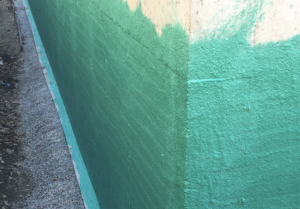
Our first line of defense is a high quality liquid applied waterproofing membrane. We commonly use products such as:
These products create a continuous barrier that seals the porous concrete surface and prevents water intrusion. Unlike simple damp proofing sprays, true waterproofing membranes are thicker and designed to resist hydrostatic pressure.
Hydrostatic pressure occurs when groundwater builds up against the foundation wall. Over time, that pressure will force water through even small pores in concrete. A proper waterproof membrane prevents this from happening.
We apply the membrane evenly and at the manufacturer’s recommended thickness to ensure full coverage.
Step Two: Protection Board or Drainage Mat
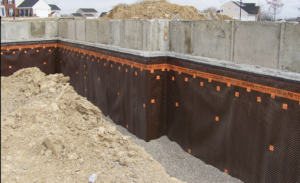
Once the membrane is applied, it must be protected. Backfilling soil directly against a waterproofed wall can damage the coating. That is where a drainage board or dimple mat system comes into play.
We frequently install products such as:
-
DELTA MS Drainage Board
https://www.cosella-dorken.com/en/products/delta-ms.php
DELTA MS is a dimpled high density polyethylene sheet that creates an air gap between the soil and the foundation wall. This serves two important purposes. First, it protects the waterproof membrane from being punctured during backfill. Second, it creates a drainage plane. Water that reaches the foundation wall is directed downward along the dimpled surface instead of sitting against the concrete. This reduces hydrostatic pressure and improves long term performance. This layer turns your foundation wall from a static barrier into an active drainage system.
Step Three: Footing Drain System
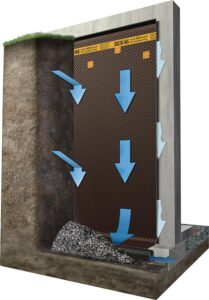
Waterproofing the wall is only part of the equation. You must also give water somewhere to go. At the base of the foundation, we install a perforated footing drain pipe surrounded by clean stone. This pipe collects groundwater and channels it away from the home.We typically use perforated PVC drain pipe that meets ASTM standards and wrap it in filter fabric to prevent clogging from sediment. The pipe is pitched properly to ensure gravity driven flow toward daylight or into a sump system. Without a functioning footing drain, water will build up against the foundation. Even the best membrane cannot perform indefinitely under constant pressure. Drainage is just as important as waterproofing.
Step Four: Clean Stone and Proper Backfill
Around the footing drain, we install washed clean stone. This promotes fast water movement and prevents soil from compacting directly against the pipe. The stone layer is often wrapped in filter fabric to reduce sediment infiltration. Once this drainage zone is complete, backfill is performed carefully to avoid damaging the drainage mat or membrane. We avoid heavy equipment pushing directly against the wall. Backfilling is done in lifts and compacted appropriately to reduce future settlement. Proper backfill techniques are often overlooked but are critical to preserving the integrity of the waterproofing system.
The Importance of Hydrostatic Pressure Control
Many homes experience foundation leaks not because the wall cracked dramatically, but because water was never properly managed outside the structure. When water accumulates in soil around a foundation, it creates hydrostatic pressure. Concrete is porous. Over time, water finds its way in.
Our system is designed to do three things:
-
Block moisture penetration at the wall surface
-
Create a drainage path down the wall
-
Remove water at the footing level
When all three work together, the foundation remains dry and protected.
Why We Do Not Rely on Interior Solutions
Interior waterproofing systems such as French drains inside the basement or wall liners are sometimes marketed as solutions. While they can manage water after it enters the home, they do not stop the water from reaching the foundation wall in the first place. Our philosophy is simple. Stop the water before it becomes a problem. Exterior waterproofing is more labor intensive and must be done during construction or excavation, but it protects the structural components of the home and reduces long term risk.
Long Term Durability and Peace of Mind
Foundation repairs are expensive. Mold remediation is expensive. Structural movement caused by water intrusion is even more expensive. By investing in a comprehensive waterproofing system during construction, homeowners gain long term protection and peace of mind. This approach also protects insulation, framing, and interior finishes. When a foundation remains dry, the entire building envelope performs better.
Building Foundations the Right Way
At Rothamel Building Company, we treat waterproofing as a non negotiable part of our custom home building process. It is not a shortcut item or a value engineered downgrade. It is a core structural system.
Our process includes:
-
Proper wall preparation
-
High performance liquid waterproofing membranes
-
Drainage mat protection systems
-
Perforated footing drains with clean stone
-
Careful and controlled backfill
When executed correctly, these layers work together as a unified defense against moisture intrusion. Water management is one of the most important aspects of foundation construction. It may be buried underground and out of sight, but it protects everything above it. A well waterproofed foundation is the beginning of a durable, high performance home.