

A Home Designed Around Comfort and Efficiency
Comfort, efficiency, and smart engineering come together in a home when radiant floor heating is installed correctly. Rather than relying on traditional forced air systems, this house was designed around a fully integrated hydronic radiant heating system that runs beneath nearly every surface. The entire interior, along with the garage and front porch, is heated from below using a network of PEX tubing embedded in gypcrete. The result is a quiet, evenly heated home supported by a highly organized set of plumbing zones in the basement that allow precise temperature control throughout the property.
How Radiant Floor Heating Works
Radiant floor heating works very differently from traditional forced air systems. Instead of blowing hot air through vents, radiant heat warms the floor surface itself. Heat rises evenly from the ground up, creating a more comfortable and stable indoor environment. Because the warmth is distributed across the entire floor, there are no cold spots, drafts, or noisy air movement. The result is a quiet, efficient heating system that feels natural and consistent in every room.
PEX Tubing Installation and Floor Preparation
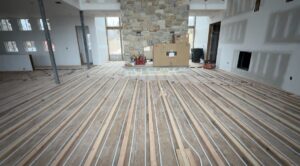
At the core of this system is the PEX tubing that runs beneath the finished floors. PEX is a flexible, durable plastic piping specifically designed for hydronic heating applications. It resists corrosion, handles temperature fluctuations well, and has a long service life. On this project, the tubing was installed using sleepers, which are spaced supports that hold the PEX in precise positions. This layout ensures even heat distribution and proper spacing for optimal performance. Once the tubing was secured and pressure tested, gypcrete was poured over the entire surface.
Benefits of Gypcrete in Radiant Heating Systems

Gypcrete plays a critical role in radiant heating systems. It is a gypsum based concrete material that flows easily and creates a smooth, level surface. One of its biggest advantages is its ability to transfer heat efficiently. When warm water circulates through the PEX tubing, the gypcrete absorbs and spreads that heat evenly across the floor. This creates a large thermal mass that retains warmth and releases it gradually, improving both comfort and energy efficiency.
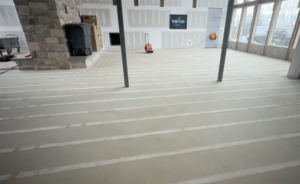
Another benefit of gypcrete is its excellent leveling properties. It self levels as it is poured, producing a flat and uniform surface that is ideal for finished flooring. Whether the final surface is hardwood, tile, or engineered flooring, gypcrete provides a stable base. It also helps reduce sound transmission between floors, adding an extra layer of acoustic insulation within the home.
Radiant Heating in the Garage and Front Porch
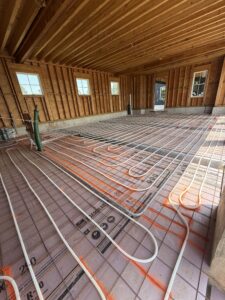
Extending the radiant system into the garage and front porch adds another layer of functionality. In the garage, radiant heat keeps the space comfortable during colder months and helps melt snow or moisture brought in by vehicles. On the front porch, the system can assist with snow and ice management, improving safety and reducing maintenance. Heated exterior surfaces are especially valuable in colder climates, where freeze thaw cycles can create hazardous conditions.
Basement Mechanical Room and Plumbing Zones
The basement mechanical room is where the complexity of the system becomes visible. Here, multiple plumbing zones are carefully organized and labeled. Each zone corresponds to a specific area of the home, allowing independent temperature control. Bedrooms, living areas, the garage, and the porch can all be adjusted separately. This zoning approach increases efficiency because heat is delivered only where and when it is needed.
The manifold system distributes warm water to each zone through dedicated loops of PEX tubing. Circulator pumps, mixing valves, and controls work together to maintain the correct water temperature and flow rate. The layout is designed for serviceability and long term reliability. Clean piping runs, clear labeling, and accessible components make future maintenance straightforward. A well organized mechanical room is not only visually impressive but also essential for performance and longevity.
Efficiency and Design Advantages of Radiant Heating
Radiant floor heating offers several advantages beyond comfort. Because it operates at lower water temperatures than traditional radiators or baseboard systems, it can be highly energy efficient. It pairs well with modern high efficiency boilers and can integrate with renewable energy sources. The absence of ductwork also improves indoor air quality by reducing the circulation of dust and allergens.
From a design perspective, radiant heating frees up wall and ceiling space. Without vents or radiators to work around, interior layouts can be cleaner and more flexible. This is especially important when building custom homes where aesthetics and functionality go hand in hand.
A Fully Integrated Radiant Heating System
This project showcases how advanced heating technology can be integrated seamlessly into a residential build. By combining full home radiant coverage, precision zoning, and a high quality gypcrete installation, the system delivers exceptional performance. The result is a home that feels warm and comfortable from the ground up, with efficient operation and long term durability built into every layer.
Radiant floor heating systems require careful planning and skilled installation, but the payoff is significant. Even heat distribution, improved efficiency, and enhanced comfort make it one of the most desirable heating solutions available. With the addition of heated garage and porch areas, this project demonstrates how radiant technology can extend beyond the interior to improve the overall livability of the property.